It wasn't until reading
a review of Silent Hill 4 on
Insert Credit that I became interested in playing a
Silent Hill game.
I'd been vaguely aware of the series, but what I'd seen of the
Resident Evil games didn't interest me and I assumed that
Silent Hill was basically the same thing.
At some point,
a friend had shown me the first part of
Silent Hill 2, thinking (rightly) that I'd like that game, but for whatever reason it didn't grab me at the time.
Soon after I read the
Silent Hill 4 review, another friend gave me a Konami preview disc that included a
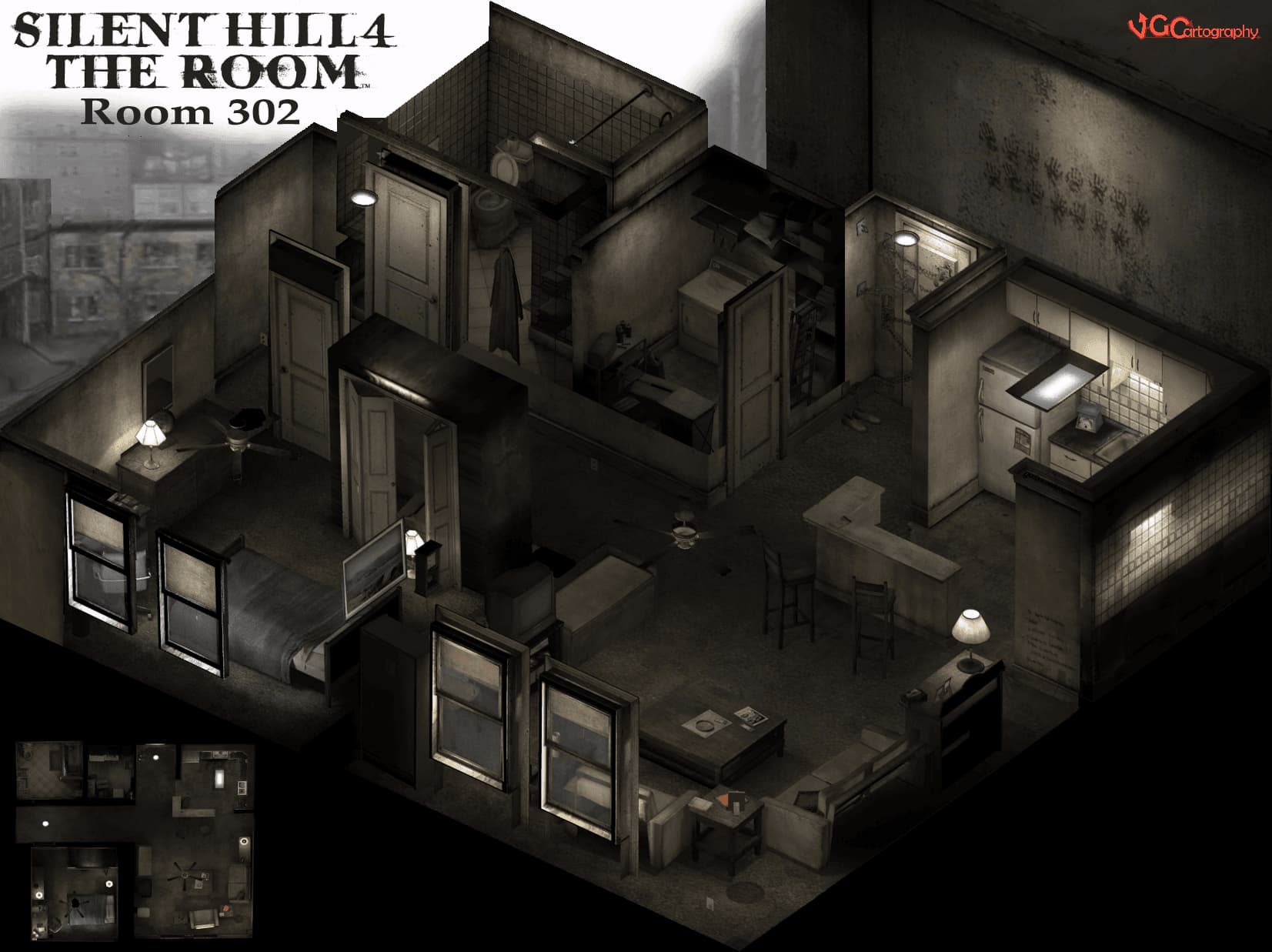
Silent Hill 4 demo.
I found the demo utterly captivating and immediately ordered a copy of the full game.
Silent Hill 4 was, and remains, the only video game ever to cause me to have a scary dream (based on the clock haunting). Over the next month or so, I also played through the three earlier games in the series.
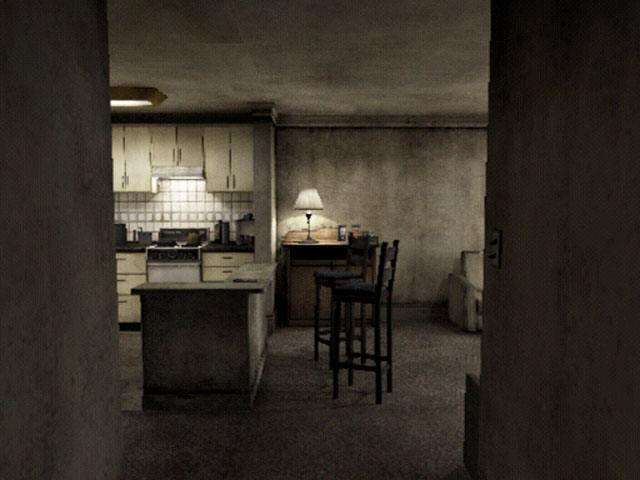
Although they fall in the horror genre, I don't like like the
Silent Hill games just because they are unsettling or violent. The main draw for me is the surreal, compelling world, the subtlety, and the dreamlike atmosphere.
"What scares you, and what kind of things do you want to use to scare players?"
"It's kind of hard to say, but it's not sudden surprise, like when someone jumps out behind you or something like that. It's more of a crawling kind of fear that grows on you. Like when you see a new character that you haven't seen, or when you see an unusual object or something that might have some intention. Something that you're not sure might be dangerous."
- Kazuhide Nakazawa, in
an interview with IGN
A thought that came to my mind while playing
Silent Hill 2 is that of all games with an ESRB "mature" rating, these may be the only ones that deserve it. That rating often denotes decidedly immature content.
"We're trying to combine horror and a dramatic story. Obviously, we want to scare the player, but we'd also like it if the player were to cry at some of the more emotional scenes."
"Most people working for game companies are game freaks, but the Silent Hill team are artists and programmers first -- mainly artists. Silent Hill 2 is not a typical game because most of our staff didn't grow up playing games. Because of this, we hope to provide the gamer with a different sort of game."
- Takayoshi Sato, in
an interview with IGN
"We have to admit that to create psychological-based game is actually quite difficult. A lot of thinking has to go into the game design when dealing with psychological horror, and at the same time I think the action element is more directly appealing to the users and it's more of the 'fun part' because you get the reaction right away, but for the psychological part it doesn't work like that, you need to look at details really closely in order to get the desired effect. So we try and keep the psychological element in the games, for the future as well, by implementing a lot of subtle expressions and details."
- Masashi Tsuboyama, in an interview with
Video Games Daily
Later Silent Hill titles were developed by groups other than "Team Silent."
Silent Hill: Origins and
Silent Hill: Shattered Memories came from Climax Studios. I didn't think that Silent Hill: Origins measured up to the four numbered games, but it was much better than I expected it to be. Shattered Memories took things in a different direction by not focusing on fear and by removing combat entirely, among other changes. It offered a different kind of experience and I thought it was a success.
I am interested in other genres for children, games that have no blood and violence.
- Akira Yamaoka, in
an interview with Kotaku

I often listen to Akira Yamaoka's music from the
Silent Hill series independent of the games, both the background music and the vocal tracks. I also like his non-video game album
iFuturelist.
 ../
../